The Quiet Distance of the Role
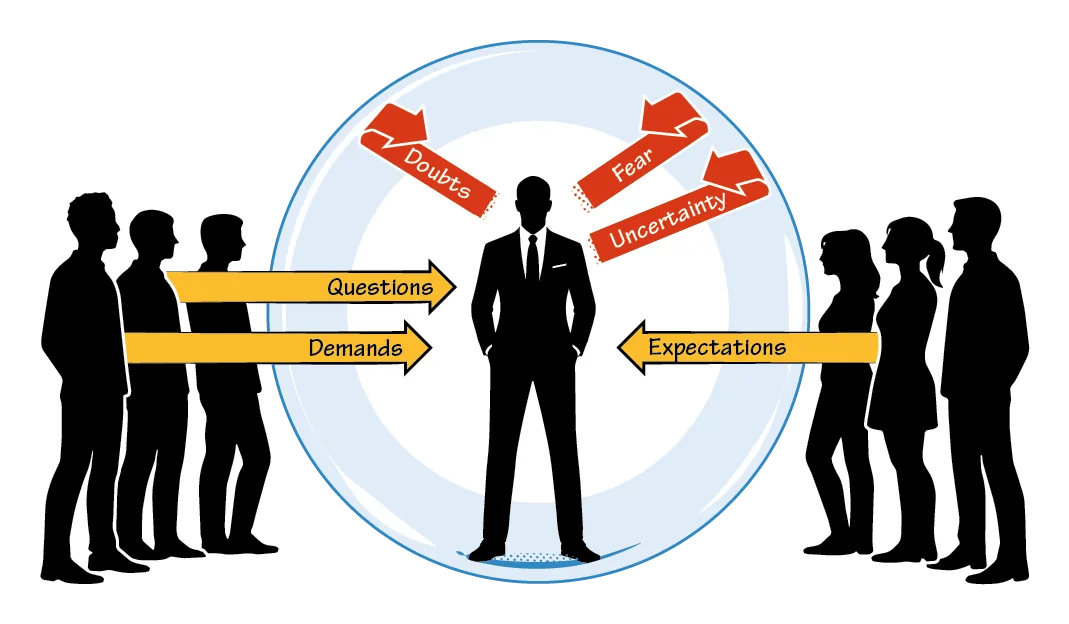
Isolation is one of the most defining and least discussed realities of the CEO role, but it does not arrive suddenly. It emerges gradually, almost imperceptibly, as the leader steps deeper into responsibility, carries decisions no one else can, and moves into conversations where full transparency is impossible. And it is not the absence of people—it is the absence of reciprocity, shared vulnerability, and equal emotional footing. Isolation is the experience of being surrounded by others while holding thoughts, pressures, and concerns that cannot be fully voiced.
Many CEOs describe isolation not through dramatic moments but through subtle ones. They talk about how people speak to them differently, how honesty becomes filtered, how praise becomes more cautious, how criticism becomes less direct. They speak of moments when they realize they are no longer part of casual conversations in the same way, or when they notice others adjusting their tone as soon as they walk into a room. A coaching client once described the first time he felt truly isolated: He had just made a major strategic decision. The room fell silent. His team was ready for direction; he was ready for reassurance. Neither came. He realized then that isolation was not about solitude. It was about the absence of a place where the weight he carried could be shared without consequence.
"Isolation was not about solitude. It was about the absence of a place where the weight he carried could be shared without consequence."
This realization often arrives when leaders notice that relationships have fundamentally changed in ways they did not choose. Colleagues who once challenged them openly now hold back. Friends outside the organization treat them with subtle deference. Family members ask carefully phrased questions, sensing that certain topics create strain. The leader becomes aware that they have lost something essential: the freedom to be uncertain, to explore ideas without consequence, to express doubt without it being interpreted as weakness. This isolation is not physical—it is emotional and psychological. It is the experience of carrying weight that cannot be set down in the presence of others.
This isolation is loss, a loss that manifests in unexpected ways. A CEO might find themselves in a social gathering, surrounded by accomplished professionals yet unable to speak candidly about the challenges they face. If the CEO mentions organizational difficulties, people offer advice that feels too simple for the complexity the CEO holds. A CEO who shares doubts about a strategic direction worries that word will travel back to the board. A CEO who expresses frustration fears it will be perceived as weakness or mismanagement, so they edit themselves in real time. They offer surface-level observations. They perform confidence they don’t fully feel. The conversation remains pleasant but hollow. The CEO returns home feeling more isolated than if they had stayed alone.
One CEO described the isolating effect of success itself. When things were going well, people wanted to attribute success to her leadership. When things were difficult, she alone had to carry the responsibility for course correction. The asymmetry meant that wins were shared but losses were solitary. This created a strange dynamic where she felt most alone when she most needed partnership. The isolation was not about lack of support; it was about the structural impossibility of truly shared accountability at the top.
"One CEO described this as 'living behind glass.' She could see people. People could see her. But there was an invisible barrier that prevented full connection."
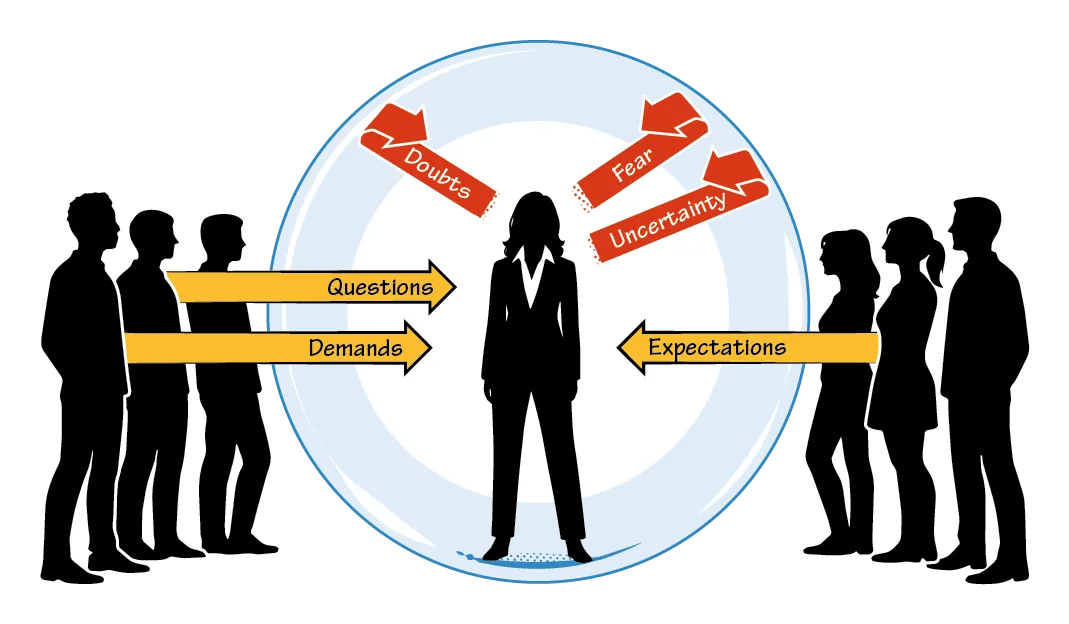
Another CEO described this as “living behind glass.” She could see people and people could see her, but an invisible barrier prevented full connection. She could not speak as freely as she once did. People could not respond as honestly as they once did. This barrier was not created by either party; it was created by the structure of power and responsibility. She described the loneliness as profound because although she had relationships, they could no longer meet her in the fullness of her experience.
The Isolation Paradox
Isolation emerges from several structural forces. The first is the asymmetry of responsibility: the CEO holds burdens that cannot be distributed. Even when decisions are collaborative, accountability settles at the top. The second is filtered communication: people instinctively protect themselves when speaking to authority, softening critique and presenting curated versions of reality. The third is the decline of true peer reciprocity: at the top, the leader becomes a source of stability but no longer has many places to find it.
Research on executive loneliness confirms what many CEOs already feel. Manfred Kets de Vries, longtime professor of leadership development at INSEAD, has written extensively about what he calls the loneliness of the chief executive, documenting how CEOs report significantly higher levels of isolation than other senior executives despite having larger networks and more frequent interactions. The isolation increases with organizational size and complexity. Research published in the Harvard Business Review has extended these findings, linking CEO loneliness to measurable declines in decision quality, increased risk aversion, and elevated burnout rates. Traditional social connections do not relieve CEO isolation because the loneliness is not a deficit of relationships but a function of role-specific pressures. The leader is surrounded yet structurally alone. Effective interventions must be designed for the unique relational constraints of the role itself, peer networks of other CEOs, executive coaching, and structured reflection practices that acknowledge isolation as a condition to be navigated rather than a problem to be solved.
Isolation also deepens when identity becomes intertwined with the role. Leaders begin to believe they must always be strong, always composed, always certain. This identity compression restricts emotional expression; the need to appear steady discourages vulnerability. Over time, the leader expresses a narrower range of emotion, which reinforces distance. The performance of leadership also factors in: CEOs often feel as though they are performing a version of themselves, watching how every word may be interpreted by the audience. Finally, confidentiality creates relational barriers. CEOs carry information they cannot share—emerging risks, personnel concerns, political tensions, negotiations, impending decisions. The more information a leader must hold privately, the narrower their emotional world becomes.
The Psychological Mechanisms of Isolation
Isolation is not merely an external condition; it is an internal experience shaped by psychological patterns that deepen over time. These patterns influence how CEOs interpret events, how they regulate emotion, and how they experience themselves within the role. What begins as a structural reality quietly becomes a psychological landscape the leader must navigate with care.
One of the most common psychological mechanisms that result is hypervigilance. As the CEO becomes responsible for the entire organization, their mind shifts into a constant state of scanning—monitoring tone, expressions, alignment, mood, and subtle changes in behaviour. Hypervigilance often begins as a strength, helping the CEO detect emerging issues early. Yet over time, it becomes exhausting. The leader feels unable to relax fully, even in safe environments. A CEO once said that the role trained him to anticipate disruptions that never came.
Suppression is another mechanism that grows quietly. To remain composed, CEOs often downplay or conceal their emotional states. That appears productive at first: it helps the leader maintain presence and provide reassurance. But its cost accumulates. Unexpressed emotion becomes internal pressure. It narrows emotional range, increases irritability, and reduces relational ease. More importantly, it reduces connection. A leader who suppresses emotion loses access to the emotional reciprocity that sustains resilience.
Narrative drift is equally significant. When CEOs lack peers who can reflect reality back to them, their internal stories about external events begin to shift, to become shaped less by fact than by isolation. Silence may be seen as criticism, delay as dissatisfaction, and disagreement as a sign of eroding trust. Small signals are amplified because the CEO has no regular interpersonal mirror to help them recalibrate interpretation.
Isolation also affects identity. Some leaders experience identity inflation: the organization relies so heavily on their presence, they begin to believe they must always be strong, always decisive, always composed. Other leaders experience identity erosion: they begin to question their own competence or judgment because they carry burdens no one else sees and receive little unfiltered feedback in return. Both inflation and erosion distort the leader’s sense of self.
Perhaps the most subtle mechanism is the loss of relational mirrors. In earlier career stages, leaders typically have peers who offer candid perspective, emotional support, and shared vulnerability. In the CEO role, these mirrors become scarce. The CEO may still have strong relationships, but their reciprocity changes. People become more cautious. The leader becomes more guarded. They begin to rely more on internal interpretation, which increases the risk of cognitive and emotional distortion.
The Emotional Impact of Isolation
The emotional impact of isolation often reveals itself slowly. It announces its presence not through dramatic moments but through changes in tone, patience, energy, and interpretation. CEOs rarely start out by describing isolation in emotional terms. They speak instead about exhaustion, irritability, indecision, or a sense that leadership feels heavier than it used to. Only later do they recognize that these are symptoms of emotional strain created not by specific events, but by the quiet distance that surrounds the role.
Loneliness is the most recognizable expression of this strain, yet even loneliness is complex at the CEO level. Leaders are rarely physically alone. Their calendars are full and their days are saturated with interaction. But loneliness in leadership is not measured by proximity; it is measured by emotional access. CEOs often lack spaces where they can express doubt, frustration, fear, or uncertainty without worrying about how that will be interpreted. When every relationship carries a reporting structure, evaluative function, or representational expectation, vulnerability becomes risky.
Another impact is emotional compression. CEOs learn to hold their emotional reactions—tightly managing expression, moderating tone, and containing instinctive responses. This control is necessary. It prevents destabilizing emotional leakage. But compression has a cost. When emotions are held in too long, they begin to accumulate as tension. The leader becomes quicker to frustration, slower to empathy, and more prone to interpret events through a fatigued emotional lens.
This compression is particularly challenging because it operates invisibly. The leader may not recognize what they are doing until the effects become undeniable. They notice that they feel more irritable than usual. Small frustrations feel disproportionately large. Their patience has shortened, or they enjoy the work less. These are signs that emotional compression has exceeded healthy limits. The leader needs release, but the structures that would normally provide release—honest conversation, vulnerability with peers, emotional reciprocity—are often unavailable.
One CEO described this compression as “living with a permanent low-grade tension that I never fully release.” She said it was not debilitating, but it was constant. It affected her sleep. It affected her presence with her family. It affected her capacity to be fully present in meetings because part of her was always managing her emotional backlog. She did not recognize the pattern until a trusted advisor asked her when she last felt fully relaxed. She could not remember. The question forced her to examine what had become normalized. She realized that she had been carrying tension for so long, she no longer noticed its weight. Her body held it as baseline; her mind had adapted to operating within it. She had stopped asking if it was sustainable—she had convinced herself it was necessary. The realization troubled her. She began to notice the physical manifestations: tightness in her shoulders, shallow breathing during stressful moments, difficulty sleeping despite exhaustion. Her body, she understood now, was sending signals she had trained herself to ignore. To counter this, she built deliberate emotional release practices into her week. The practices were simple: time with people who knew her before she was CEO, physical activity that allowed emotional discharge, and regular coaching sessions where she could speak without filtering. She protected these practices with the same discipline she applied to board meetings. Release, she learned, was not optional—it was maintenance. Her new practices did not eliminate the compression, but they did prevent it from becoming unsustainable. More importantly, they reminded her that she was a person, not only a position.
Isolation also intensifies decision fatigue. Decisions that would otherwise be manageable become heavier because the leader carries the emotional impact alone. When CEOs cannot share uncertainty, cannot test their thinking with peers, and cannot express the emotional weight before or after a decision, the cognitive load increases. Confidence erosion is another quiet consequence. Without candid mirrors, leaders begin to doubt whether their interpretations are accurate. They second-guess decisions that would once have felt clear.
Also associated with being the stabilizing presence for others while having no such presence for oneself is emotional strain. CEOs spend much of their emotional energy regulating the organization, managing tension, absorbing frustration, and projecting steadiness. Over time, this dynamic can leave the leader depleted. The emotional labour of leadership is rarely acknowledged, yet it is one of the most significant drains on a CEO’s psychological capacity.
Research on emotional labour in leadership demonstrates that the work of regulating one’s emotional expression to meet organizational needs creates measurable psychological and physiological costs. The foundational work in this field was done by sociologist Arlie Hochschild, whose book The Managed Heart established the concept of emotional labour and traced its costs in service workers. Subsequent research, particularly that of Alicia Grandey at Penn State, has extended these findings to leadership. Leaders who engage in high levels of emotional labour—suppressing authentic emotion while displaying expected emotion—experience elevated stress hormones, reduced immune function, and higher burnout rates. The research reveals that the strain is greatest when leaders must maintain composure outwardly while internally processing complex emotions, the exact condition of CEO leadership. For the CEO, this work validates a quiet truth: Serving as the organization’s emotional stabilizer while having little emotional reciprocity is not merely demanding. It is depleting in ways that accumulate silently and compound over years.
The CEO’s Responses to Isolation
When isolation takes root, CEOs do not simply endure it. They adapt to it. They develop responses—some intentional, others unconscious—that help them navigate the emotional distance and relational complexity of the role. These adaptations often begin as coping strategies but gradually become part of how the leader thinks, works, and interacts.
One of the earliest adaptations is intensified self-reliance. CEOs grow accustomed to relying on their own judgment because the role often requires it. They stop seeking input as often, not out of arrogance but out of habit. They tell themselves they don’t want to burden others, or that involving others will take too long, or that people can’t understand the full context anyway. Over time, self-reliance turns into isolation reinforcement. The leader handles more internally, exposes less emotionally, and gradually loses the benefits that come from external perspective.
Another response is selective vulnerability. CEOs learn to share pieces of their internal experience, but only in controlled ways or in relationships where the risk feels manageable. They may confide in one or two people—a trusted advisor, a coach, occasionally a board member—but they keep vulnerability contained. This selective vulnerability does help the leader release some emotional weight, but it also maintains the broader pattern of isolation.
Some CEOs respond to isolation by increasing their focus on execution. They pour energy into tasks, metrics, and operational certainty because execution provides a sense of control. Execution becomes a buffer between them and the emotional demands of the role. Productivity replaces connection. One CEO realized he had been using his calendar as armour. He scheduled every hour to avoid the internal discomfort that emerged in stillness. When he was in motion, he felt purposeful. When he stopped, he felt the isolation pressing in. The realization came during a rare unscheduled afternoon when nothing required immediate attention. The silence felt overwhelming. He noticed that he had been avoiding that silence for years, filling every gap with activity to prevent himself from feeling the weight he carried alone. Now he sat with the discomfort. He observed it rather than fled from it, and what emerged surprised him. Beneath the busyness was grief—not for anything specific, but for the version of himself he had set aside when he became CEO. The person who could be uncertain without consequence. The person who could think aloud without every word being analyzed. The one who could rest without feeling like he was failing. That person still existed, but the role had compressed him into smaller and smaller spaces. The CEO realized that his relentless productivity was not strength, it was avoidance. He was running from feelings he believed he could not afford to have. Once he saw the pattern, he was able to choose differently. He began creating intentional space for stillness, not because it felt comfortable, but because it was necessary. He learned that the weight he carried alone would not disappear through activity: it required acknowledgment. This pattern is common among CEOs who use busyness as an anaesthetic for isolation.
The irony is that this response often makes the leader more effective in the short term. They may get more done, appear more decisive, and demonstrate commitment through sheer output, and the organization interprets the intensity as strength. But what the organization cannot see is that the intensity is serving a psychological function for the leader: it keeps isolation at bay through constant distraction. The cost is visible only later, when the leader experiences burnout, health consequences, or a sudden inability to sustain the pace they maintained for years.
Other leaders compensate through heightened emotional control. They manage expression so carefully that they appear calm regardless of what is happening internally. People praise their steadiness and boards appreciate their composure, but the cost of constant regulation is emotional depletion. The leader becomes so skilled at maintaining external composure that they lose access to their own internal signals. They no longer know what they genuinely feel. They have trained themselves to suppress emotion so thoroughly that authentic emotional experience becomes difficult to access.
"One CEO described this as 'becoming a thermostat instead of a thermometer.' He no longer registered his own emotional temperature. He only regulated the temperature of the room."
One CEO described this as “becoming a thermostat instead of a thermometer.” He no longer registered his own emotional temperature—he only regulated the temperature of the room. When a coach asked him how he felt about a difficult board meeting, he responded by describing how the board members seemed to feel. He could read everyone else’s emotional state with precision but had no access to his own. This disconnection from internal experience is one of the more insidious effects of isolation: the leader becomes so externally focused that they lose the internal compass that should guide their decisions.
Narrative compensation is another pattern. CEOs begin to tell themselves stories that make isolation feel necessary or noble: “This is the burden of leadership”; “This is what CEOs are supposed to handle alone”; “Others will worry if I share too much.” These narratives are not entirely false—leadership does require boundaries and emotional discipline. But when these stories become absolute, they prevent the leader from seeking the connection and support they genuinely need.
The danger of these adaptive responses is that they work in the short term. They allow the leader to function, reduce immediate discomfort, and create the appearance of strength. But over time, they deepen isolation rather than resolve it. The leader becomes more practised at managing alone, which makes asking for support feel increasingly foreign. The adaptations that once protected the leader eventually trap them in patterns that prevent the very connection they need to sustain themselves.
Restoring Connection
Isolation is not a problem to eliminate. It is a condition to understand and manage. The CEO role will always contain elements of solitude, emotional weight, and relational distance. The goal is not to remove these elements but to ensure that the leader has enough connection, reflection, and relational grounding to remain whole within them. When CEOs approach isolation intentionally, they begin to rebuild the internal and external structures that allow them to lead with steadiness and humanity.
One of the most important steps in restoring connection is rebuilding relational mirrors—trusted individuals who offer honest reflection without agenda. These mirrors do not need to be numerous; they need to be reliable. A CEO might have one within the organization, one outside it, and one in their personal life. What matters is that these relationships allow for vulnerability, challenge, and accurate perception.
The challenge in building these relational mirrors is that the CEO role makes authentic connection difficult. People naturally adjust their behaviour around authority. Even trusted advisors may moderate their feedback to avoid damaging the relationship. The CEO must actively create conditions where honest reflection is possible. This requires explicit permission. It requires rewarding candour even when it is uncomfortable. It requires demonstrating through consistent behaviour that the relationship can handle difficult truths. One CEO described telling his coach, “I need you to tell me what I don’t want to hear, especially when I don’t want to hear it.” That explicit invitation created permission for the level of honesty he needed.
Relational mirrors serve multiple functions. They provide reality checks when the CEO’s interpretation drifts from objective conditions. They offer emotional support when the weight becomes unsustainable. They challenge assumptions when the CEO’s thinking becomes too narrow. They reflect back patterns that the CEO cannot see from inside their own experience. Without these mirrors, the CEO operates in a self-reinforcing loop in which their perceptions go unchallenged and their emotional reality, unwitnessed. The mirrors break the loop. They introduce perspective that prevents isolation from becoming distortion.
Many CEOs also benefit from developing a small, intentional network of peers: other CEOs or senior leaders who understand the unique pressures of the role. Even the simple ability to say “I know exactly what that feels like” creates relief. Peer networks provide validation that the challenges of the role are structural rather than personal failures. They offer practical wisdom that comes from lived experience. They create space for vulnerability that is impossible within the organizational hierarchy. One CEO described his monthly dinner with three other CEOs as the only place where he felt fully understood. They spoke the same language and carried the same burdens. They could be honest about their struggles without worrying about how that honesty would be interpreted. During one dinner, he shared with the others that he was struggling with a decision about his COO, who was technically competent but created tension across the leadership team. The CEO felt paralyzed. He feared making the wrong call would damage the organization. He also feared that his hesitation was already causing harm. His peers listened without judgment. One shared a similar experience. Another asked clarifying questions that helped him see the decision more clearly. The third simply said, “This is hard. There is no clean answer.” That acknowledgment mattered more than advice. The CEO left the dinner not with a solution, but with new perspective: he had been treating his uncertainty as a flaw rather than as appropriate for the complexity he was dealing with. This monthly connection with peers sustained him through periods when isolation felt overwhelming. He learned that peer relationships don’t solve problems, but they do create the relational space in which leaders can think more clearly about the problems they must solve alone.
Another essential step is creating structured spaces for reflection. CEOs often move from one decision to the next without integrating emotional or cognitive residue. Reflection interrupts this automatic momentum. It provides time to metabolize experience, clarify interpretation, and reconnect with personal values. Some leaders build reflection into the rhythms of their week through journalling, coaching conversations, or quiet time away from operational demands.
The challenge is that to many CEOs. reflection feels unproductive. It does not generate immediate outputs. It does not advance projects. It does not resolve problems. In organizations that reward constant motion, reflection can feel like wasted time. Yet without it, leaders accumulate unprocessed experience that distorts judgment, narrows perspective, and depletes emotional capacity. Reflection isn’t a luxury—it’s maintenance. It prevents the cognitive and emotional clutter that makes clear leadership impossible.
Different leaders structure reflection differently. Some use written journalling to externalize their thinking and notice patterns over time. Others use coaching conversations to process complex situations with a skilled listener. Some practise meditation or contemplative silence to quiet internal noise. Others take long walks on which physical movement supports mental processing. The specific practice matters less than the commitment to create regular space where the leader can step out of reactive mode into reflective mode, where they can ask themselves what they are learning, what they are feeling, what they are becoming, and whether their actions align with their intentions.
A CEO once described reflection as “the only time I remember who I am.” During operational hours, he was responding, deciding, managing, directing. He was constantly in motion. But during his weekly reflection practice, he could pause. He could notice patterns he had not seen during the week. He could identify moments when he had reacted rather than responded. He could clarify what mattered most and what was merely urgent. Without that structured pause, he said he felt like he was living someone else’s life, constantly responding to external demands and not connecting to internal direction. Reflection restored his sense of agency. It allowed him to lead from intention rather than from momentum.
“Reflection was the only time I remember who I am.”
Rebalancing also requires emotional expression—not everywhere, but somewhere. CEOs need places where they can express uncertainty, frustration, sadness, or fear without concern for how it will be interpreted. This expression does not weaken leadership; it restores it. Leaders who access private emotional space are more composed in public. They do not leak tension onto the organization because they have already released it in healthier ways.
It is equally important for CEOs to re-anchor their personal identity outside the role. Isolation deepens when the leader’s self-concept becomes fully entangled with performance or authority. Reconnecting with personal interests, family, community, and values restores dimensionality. When CEOs nurture parts of their identity not tied to the organization, they become less susceptible to the distortions that isolation creates.
Integrating Isolation into Leadership Presence
Isolation, once understood and named, becomes more than an emotional burden. It becomes a lens that reveals the inner life of leadership. CEOs who integrate the experience of isolation into their understanding of themselves and their role gain a depth of presence that is difficult to develop through technical skill or operational excellence alone. They learn to distinguish between solitude and disconnection, between responsibility and self-reliance, and between emotional containment and emotional suppression.
The first step in integration is recognizing that isolation is not a verdict on the leader’s relational ability—it is a structural condition of holding authority. Leaders who internalize isolation as a personal flaw respond with self-criticism, withdrawal, or overcompensation. Those who understand isolation as inherent to the role approach it with clarity and compassion. They stop expecting the role to offer what it cannot provide, and they begin building the relational frameworks that the role itself cannot supply.
Integration also requires understanding the difference between leadership presence and leadership performance. Performance is the expression of competence, confidence, and stability; presence is the internal steadiness from which that expression arises. When leaders rely on performance alone, isolation intensifies because the leader becomes increasingly dependent on outward signals to maintain inner equilibrium. When leaders cultivate presence, through reflection, relational grounding, and emotional awareness, they can operate within the solitude of the role without losing themselves in it.
A CEO once described this shift as the moment he realized he could be alone without feeling lonely. He said that once he accepted isolation as a condition of the role rather than a failure of connection, he stopped fighting it. He created intentional spaces for reflection, clarified his relational needs, and stopped asking the role to provide emotional support it was never designed to give. The shift did not make isolation disappear, but it did become bearable, predictable, and even useful.
Leaders who achieve this level of integration develop a steadiness that others feel immediately. Their presence becomes calm without being detached, strong without being rigid, and clear without being forceful. They stop reacting to the emotional weight of the role and begin shaping it. They experience isolation without being defined by it. Isolation remains a companion throughout the CEO journey, but it no longer operates as an unexamined force. It becomes navigable. It becomes informative. It becomes a reminder that leadership is not only the act of guiding others, but also the ongoing work of guiding oneself.
A Practice for This Chapter: Daily Reflection, Weekly Assessment
Daily Reflection Consider, over the next week, asking yourself one question each evening: “Where today did I carry something alone that I could have shared?” The question is not meant to prompt immediate action—it is meant to reveal pattern.
Weekly Assessment At week’s end, reflect on these dimensions:
Relational mirrors: Who offers you honest reflection without agenda? When did you last seek their perspective?
Emotional release: Where do you express uncertainty, frustration, or doubt without filtering? If nowhere, what would make that possible?
Identity anchors: What parts of yourself exist outside the CEO role? When did you last engage them?
Peer reciprocity: Who in your life carries similar weight? When did you last connect with someone who truly understands the role’s pressures?
Selective vulnerability: Are you sharing burdens strategically, or are you isolating by default?
Over time, you may notice which burdens you hold by habit rather than necessity, and which relationships might bear more weight than you have allowed them. Isolation often deepens not because support is unavailable, but because we forget to look for it. Naming the pattern is the first step toward reshaping it.
Reflection Tool
Leadership Isolation Indicator
Ten questions. Five minutes. A clearer picture of where you stand — and what to do about it.
Take the Assessment →Another free chapter
Chapter 20: The CEO and Crisis →Continue the Journey
CEO Cadence
The Inner Work of Becoming a Cadence-Based Leader
The full arc of the CEO role — from early identity reshaping through sustained pressure, to legacy and transition. Pre-order opens soon.
Pre-order opens soon. No spam. Only book updates. Unsubscribe any time. Privacy Policy.